A coffee-to-water ratio is simply the weight of coffee compared to the weight of water used to brew it, and it is one of the fastest ways to make a cup taste more like what you actually want. This page is meant to sit near the kettle rather than be read once and forgotten.
Reading a ratio like 1:16
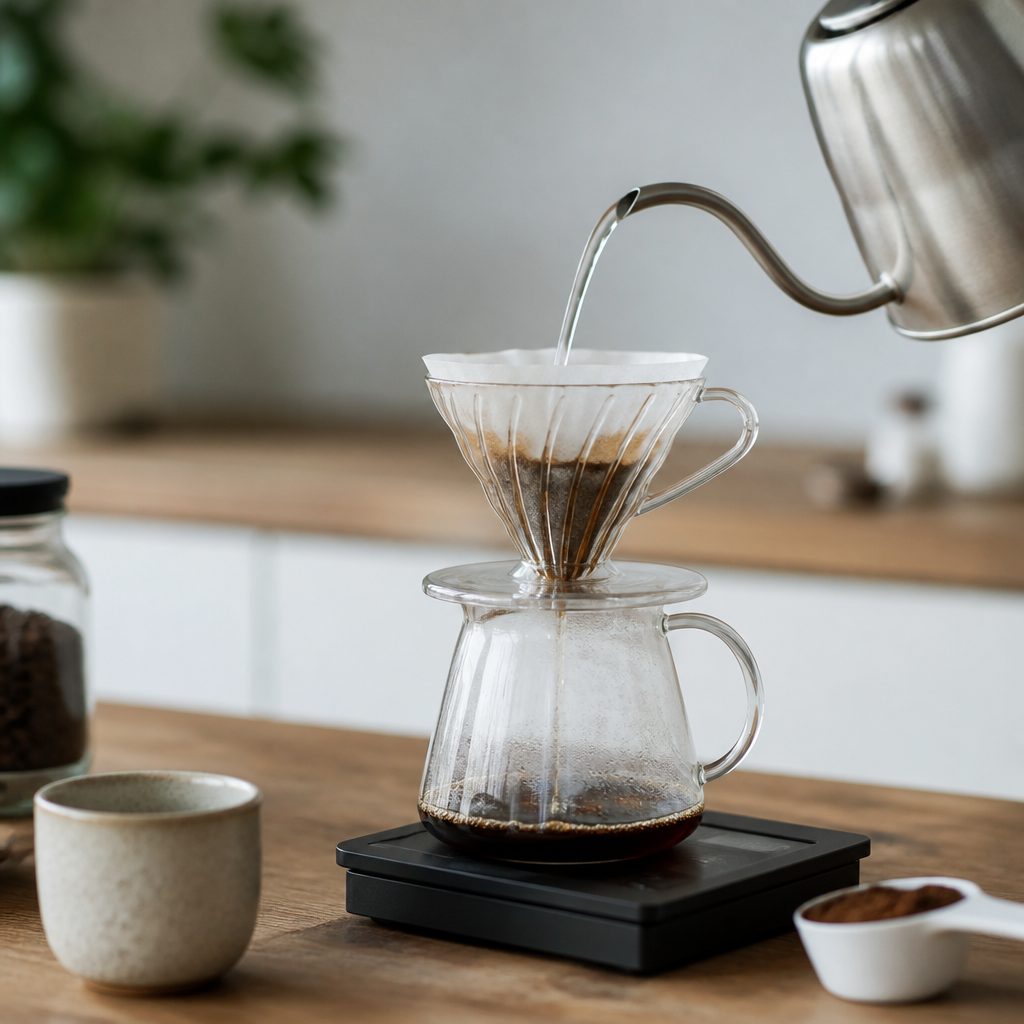
A ratio written as 1:16 means one part coffee to sixteen parts water, by weight. So 20 grams of coffee at a 1:16 ratio calls for 320 grams of water, since 20 multiplied by 16 equals 320. Lower numbers on the water side, like 1:14, produce a stronger cup; higher numbers, like 1:18, produce a lighter one.
This single idea, scaling both sides of the ratio together, is what lets you brew any size batch from a single number without needing a separate recipe for every cup size.
Starting ratios by method
| Method | Typical ratio | Example (grams) |
|---|---|---|
| Pour-over | 1:15 to 1:17 | 20 g coffee, 320 g water (1:16) |
| French press | 1:12 to 1:15 | 30 g coffee, 420 g water (1:14) |
| AeroPress | 1:12 to 1:16 | 17 g coffee, 240 g water (1:14) |
| Cold brew concentrate | 1:4 to 1:8 | 100 g coffee, 600 g water (1:6) |
| Drip machine | 1:15 to 1:18 | 60 g coffee, 1000 g water (about 1:17) |
Cold brew concentrate sits at a much lower ratio because it is meant to be diluted with water or milk before drinking, unlike the other methods listed, which are ready to drink as brewed.
A ratio is not a rule to obey. It is a number you adjust once, in one direction, until the cup tastes like what you actually wanted.
Reading note
Adjusting a ratio to your own taste
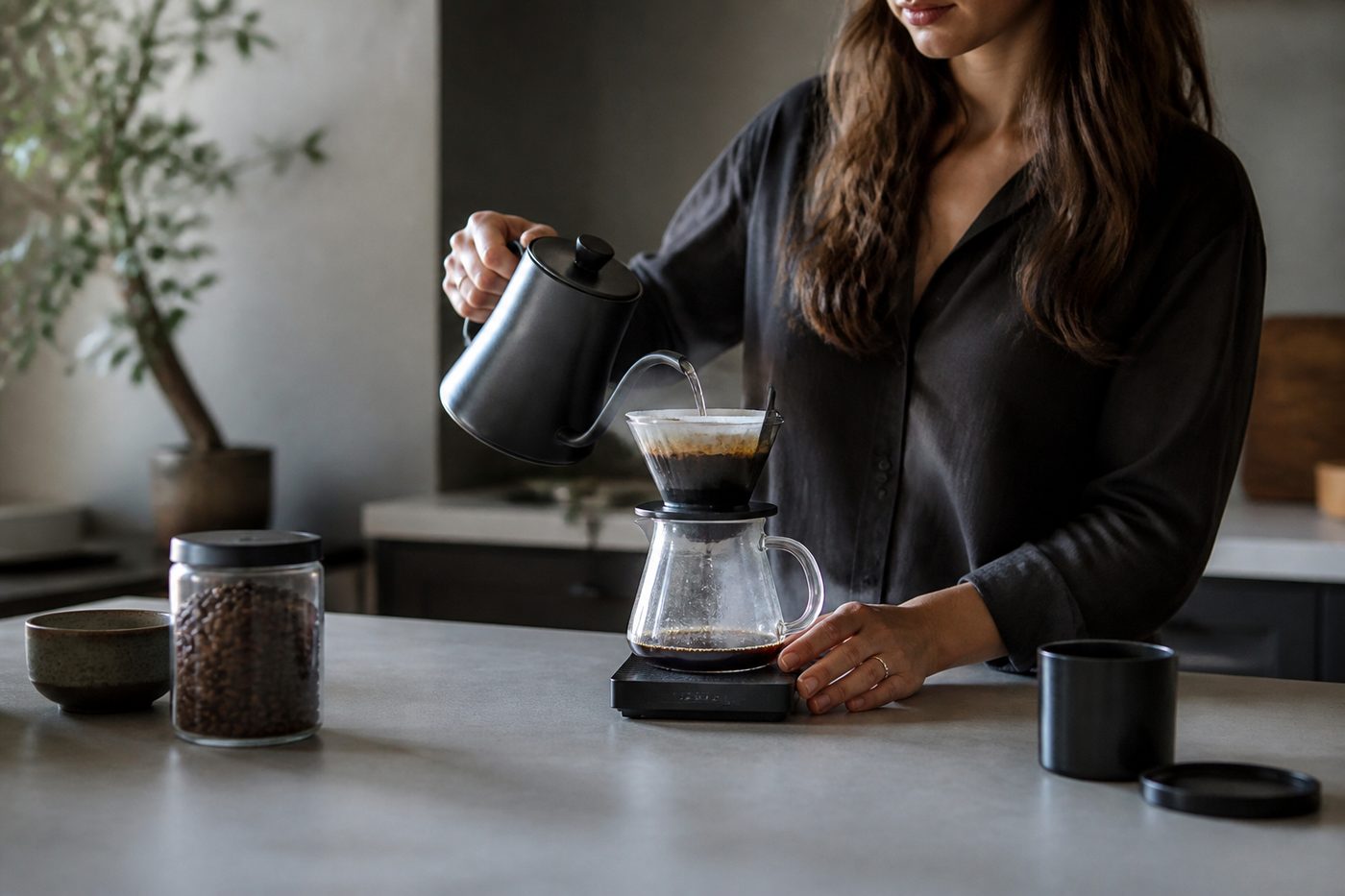
If a cup tastes weak or watery, move toward a lower ratio number, meaning less water for the same coffee, or more coffee for the same water. If a cup tastes too strong or overwhelming, move the other way. Change the ratio in small steps, such as from 1:16 to 1:15, and give each change its own cup before judging it, since it is easy to mistake a change caused by grind or freshness for one caused by ratio.
Why weight beats volume
A tablespoon or scoop of coffee can vary in weight by a meaningful margin depending on grind size and how tightly the grounds are packed, which makes volume measurements far less consistent than they seem. A kitchen scale removes that variability, which is why most ratio guides, including this one, are written in weight rather than spoons or cups.
Where to go next
Ratio and grind size work together to control extraction. If your cup still tastes off after adjusting the ratio, the troubleshooting section walks through the other likely causes.
Ratios assume a dry ingredient measured before it meets water, and that habit carries over to anything else you steep or bloom. Saffron works the same way: a pinch is not a dose, and a gram of threads goes much further than most cooks expect once it is crushed and steeped. The same logic of dosing by weight, applied to a spice rather than a bean, is what the guide to saffron picking, drying, dosing and storing walks through, from the flower to the drying tray, including how the threads should be kept and the mistakes cooks make with them.