Bitterness and sourness are usually treated as one problem, "bad coffee," but they point to opposite causes. Telling them apart is the fastest way to know what to change before your next cup.
Under-extraction and over-extraction, in short
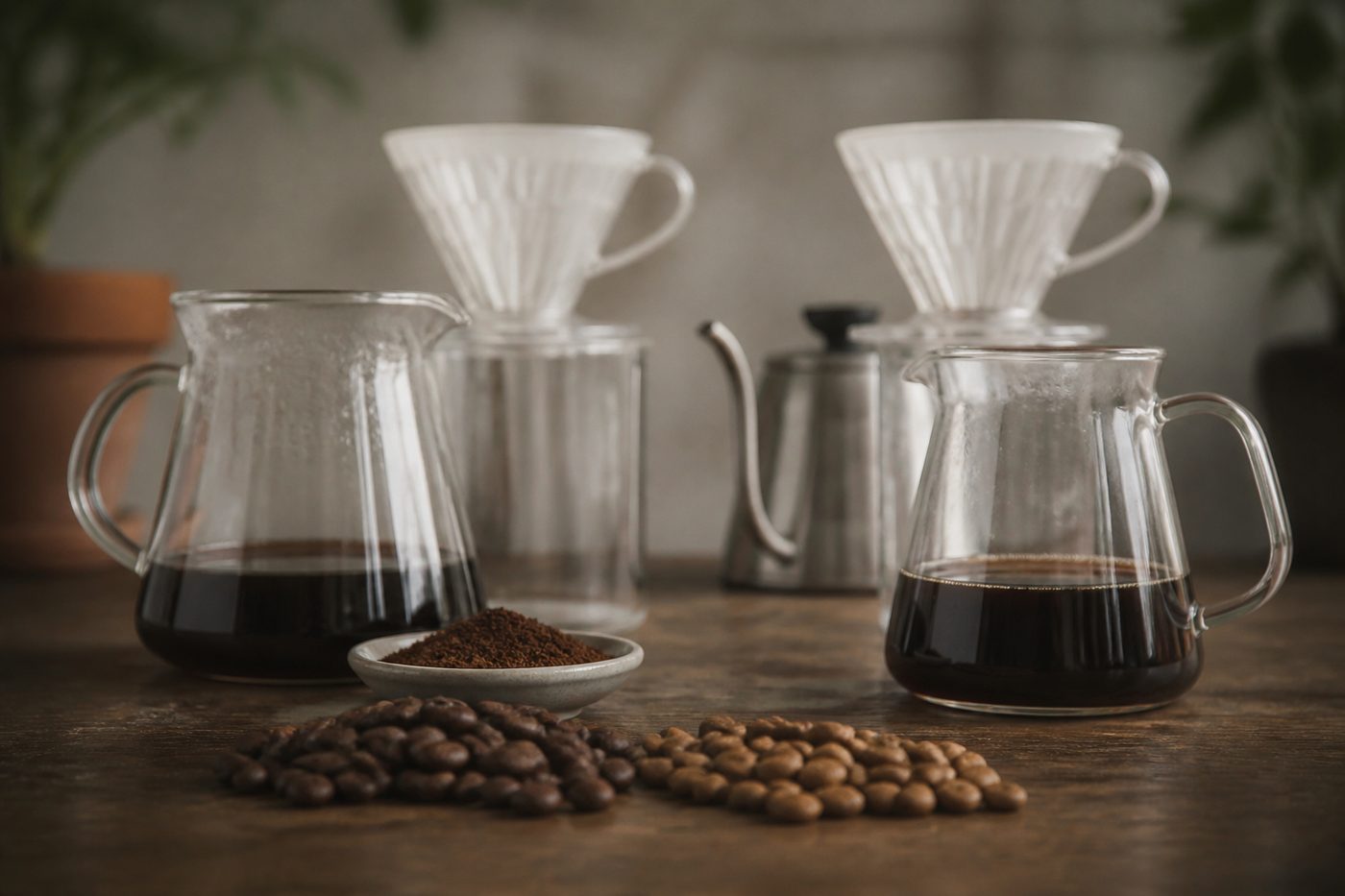
Extraction is the process of water pulling flavor compounds out of ground coffee. Different compounds dissolve at different rates: the pleasant acids and sugars come out first, and the harsher, bitter compounds come out later. Under-extraction means the brew stopped before enough of the good flavors were pulled out. Over-extraction means the brew continued long enough, or intensely enough, to start pulling out the harsher compounds too.
Sour coffee: usually under-extracted
A sour or sharply acidic cup, especially one that also tastes thin or salty, is the classic sign of under-extraction. The most common causes are a grind that is too coarse for the method, water that is not hot enough, or a brew time that is too short.
| Possible cause | What to try |
|---|---|
| Grind too coarse | Grind finer, in small steps |
| Water too cool | Brew closer to just off the boil |
| Brew time too short | Slow the pour or extend steep time slightly |

Bitter coffee: usually over-extracted

A harsh, lingering bitter cup, particularly one that also feels heavy or ashy, usually points to over-extraction. The most common causes are a grind that is too fine, water that is too hot, or a brew time that runs too long.
Sour asks for more extraction. Bitter asks for less. Once you know which one you are tasting, you already know which direction to adjust.
Reading note
| Possible cause | What to try |
|---|---|
| Grind too fine | Grind coarser, in small steps |
| Water too hot | Let boiled water rest 30 seconds before brewing |
| Brew time too long | Pour faster or shorten steep time |
When it is not extraction at all
Not every off flavor is about extraction. Stale coffee often tastes flat and papery rather than sour or bitter, no matter how carefully it is brewed, which points back to freshness rather than technique. A gritty or muddy cup usually means a torn filter or a grinder producing too much fine dust, rather than a ratio or timing problem. Rinsing a metal filter or trying a fresh paper filter often solves this quickly.
Where to go next
Grind size is the single most common lever behind both problems on this page, and is covered in full detail in the grinding and equipment section.
Bitterness and sourness usually trace back to the beans themselves, not just the brew. Coffee that sat on a shelf too long, or was stored somewhere damp, tastes flat or harsh no matter how you adjust the grind. The same care applies to any paper you keep around the kitchen: light, heat and moisture do the damage. If you buy used books, the habits overlap, and checking a copy before you buy covers what to inspect on a title page, how to pack a book for travel, and how to store it once it arrives.
Bitterness and sourness both come from extraction, but the fix is not always in the coffee. Before you change the grind or the water temperature, check whether something else in the cup is throwing off your palate. A pinch of a strong dried spice, for example, can read as harsh or metallic next to a light roast, and the usual advice about grind and ratio will not help. If you cook with saffron, the common mistakes with saffron are worth knowing, since dosing and storage change how the threads taste in both food and drink.