Freezing coffee beans divides even experienced home brewers. Some treat it as an easy way to lock in freshness for weeks; others avoid it entirely. Both sides have a real point, and the right answer depends more on how you store the beans than on freezing itself.
How coffee actually goes stale
Roasted coffee stales through two related processes: the loss of aromatic compounds that escape as gas over time, and oxidation, where oxygen in the air reacts with the coffee's oils and breaks down flavor. Both processes speed up in the presence of heat, light, moisture and, most of all, exposure to air.
Grinding coffee accelerates both processes dramatically by exposing far more surface area to air, which is why ground coffee stales within days while whole beans can stay reasonably fresh for weeks.
The case for freezing
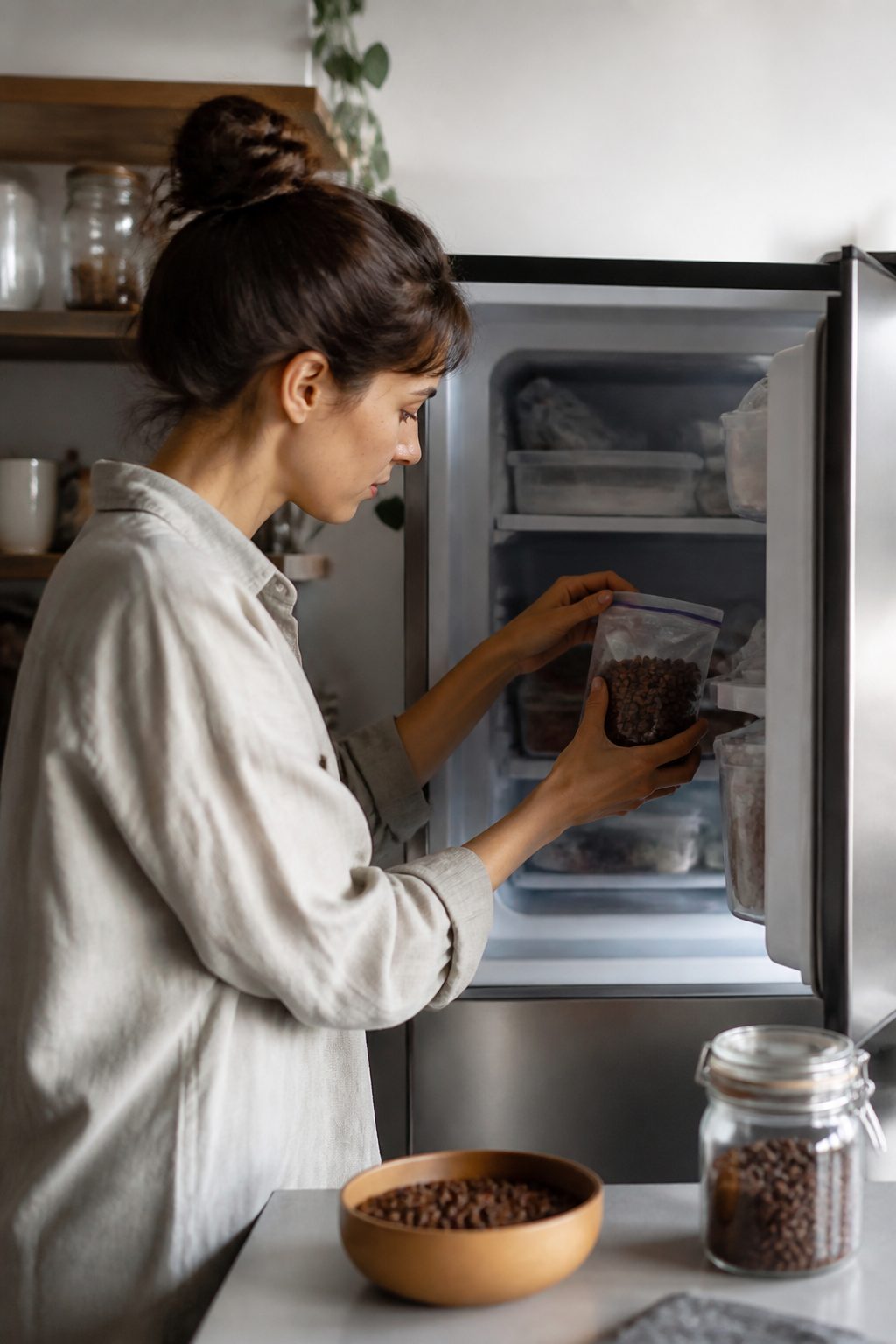
Cold temperatures slow down chemical reactions, including the oxidation that ages coffee. Beans frozen in an airtight container shortly after roasting, and portioned so that each bag or container is only opened once, can hold much more of their flavor over several weeks than the same beans left at room temperature over the same period.
The case against freezing
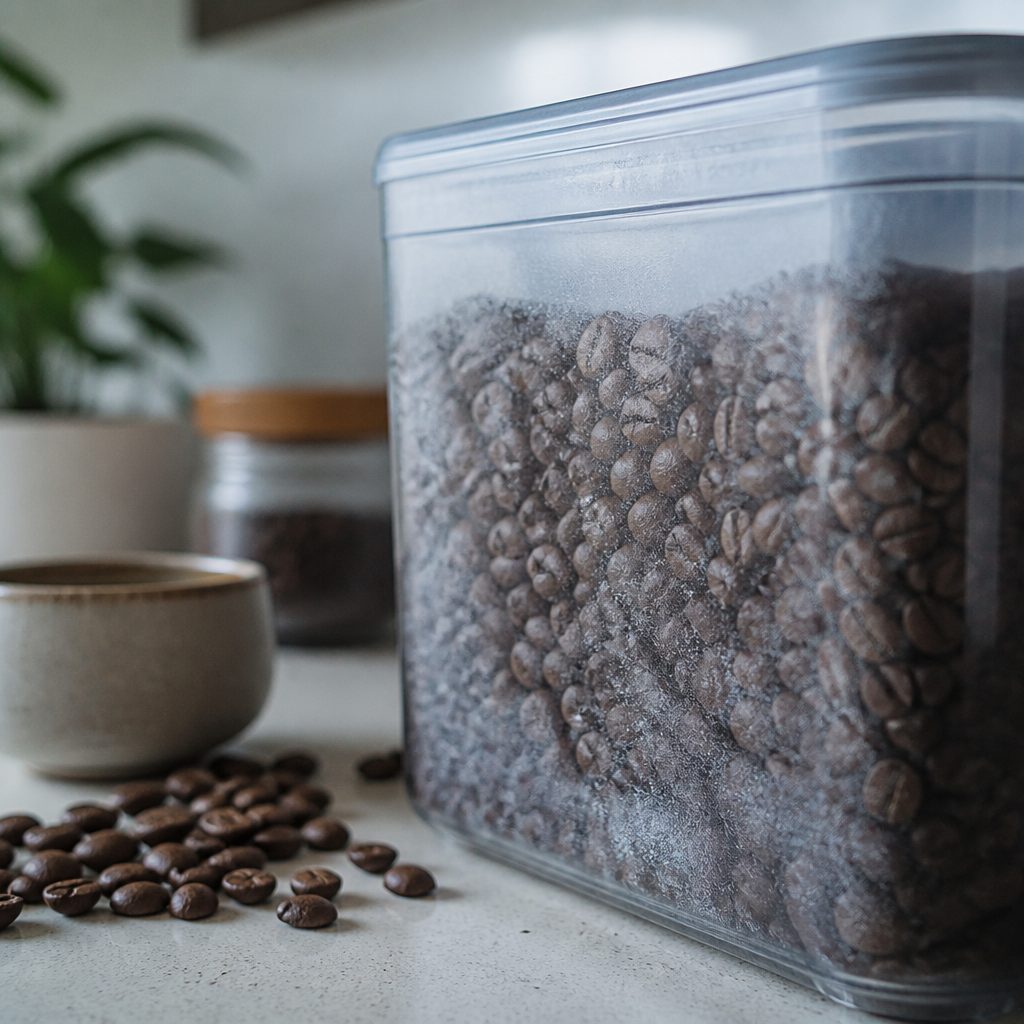
Freezing only helps if the coffee is well sealed. Beans exposed to the moisture and odors inside a typical freezer, or repeatedly taken out and returned to room temperature, can pick up off flavors and moisture that outweigh the benefit of the cold. Repeated temperature swings, from freezing to thawing and back, are generally considered more damaging than simply leaving coffee at a stable room temperature in a good container.
In practice, this means freezing works well as a long-term reserve, portioned into small sealed amounts used one at a time, and works poorly as a jar you dip into every morning.
Freezing does not fix bad storage. It only slows down decay that a poor container would have let happen faster anyway.
Reading note
A simpler routine that solves most of the problem
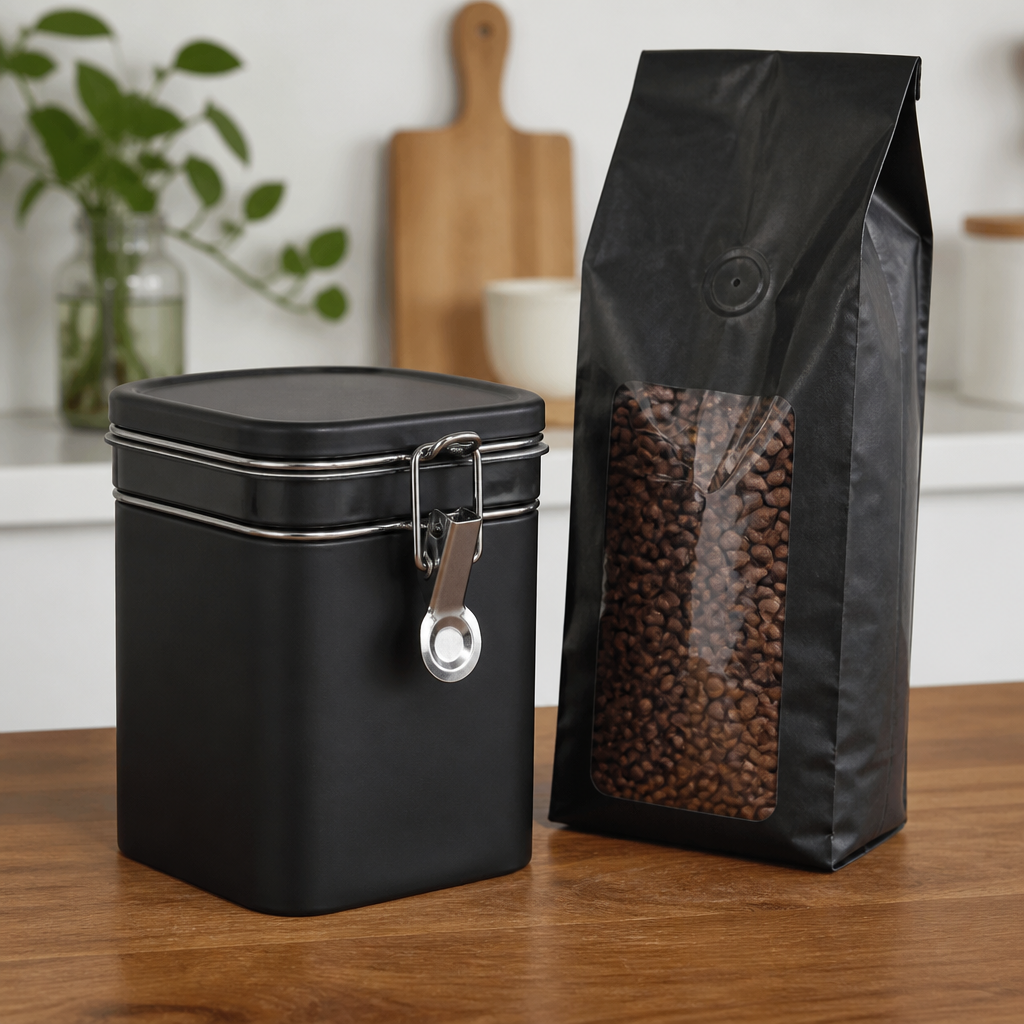
For most home drinkers who go through a bag of coffee within two to four weeks, an airtight, opaque container kept at room temperature, away from a stove or a sunny window, solves the majority of freshness problems without a freezer at all. Freezing becomes more worthwhile when buying in bulk or when a bag will sit unopened for longer than a month.
Where to go next
How the coffee was roasted also affects how quickly it stales, which is covered from a different angle in the beans and roast section.
Freezing works best when the beans go in whole, sealed, and stay there. Every time a bag comes out and warms up, moisture condenses on the surface, and repeated cycles cost more flavor than one long stay in the cold. So portion before freezing, label the date, and grind straight from frozen. The same logic applies to any dry good you mean to hold for years: stable temperature, stable humidity, and no unnecessary handling. If you also keep printed matter, this guide to keeping a collection in condition covers storage, packing, and what to check when an item arrives by post.
Freezing works because cold slows the reactions that stale coffee, and the same logic applies to any aromatic plant material you keep for cooking. The variables that matter are moisture, air and temperature swings, not the freezer itself. A spice kept in a warm cupboard next to the stove loses its volatile oils the same way a bag of beans left open on the counter does. For a worked example of that principle outside coffee, the guide to keeping a spice fresh follows saffron from picking through drying, dosing and storage, including how one gram behaves in a risotto and the mistakes cooks make with it.