A coffee bag can carry a dozen pieces of information, from a roast date to a farm name to tasting notes that read like a wine label. Some of these tell you something you can actually use when brewing. Others are closer to marketing. Here is how to tell the difference.
Roast date: the most useful line on the bag
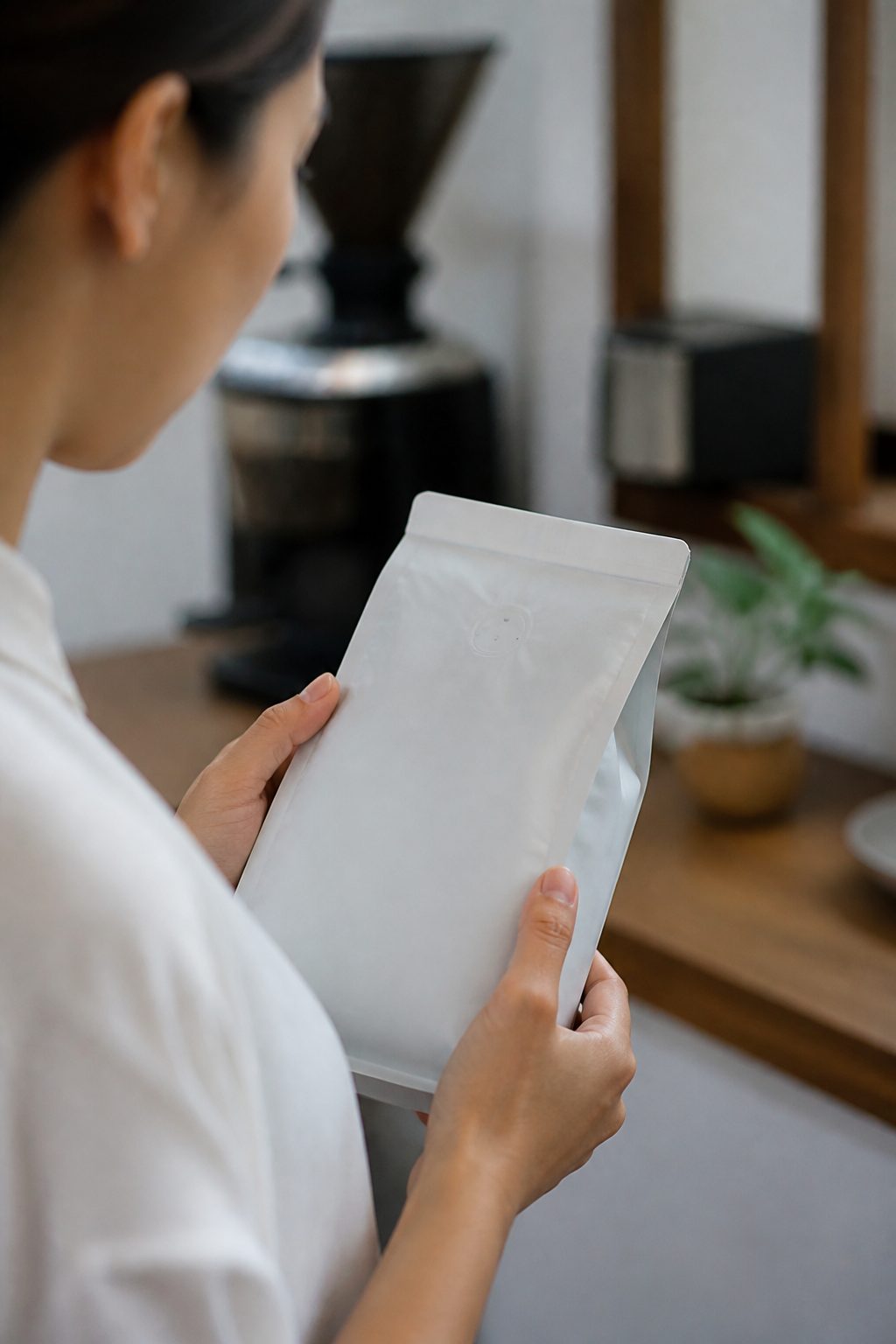
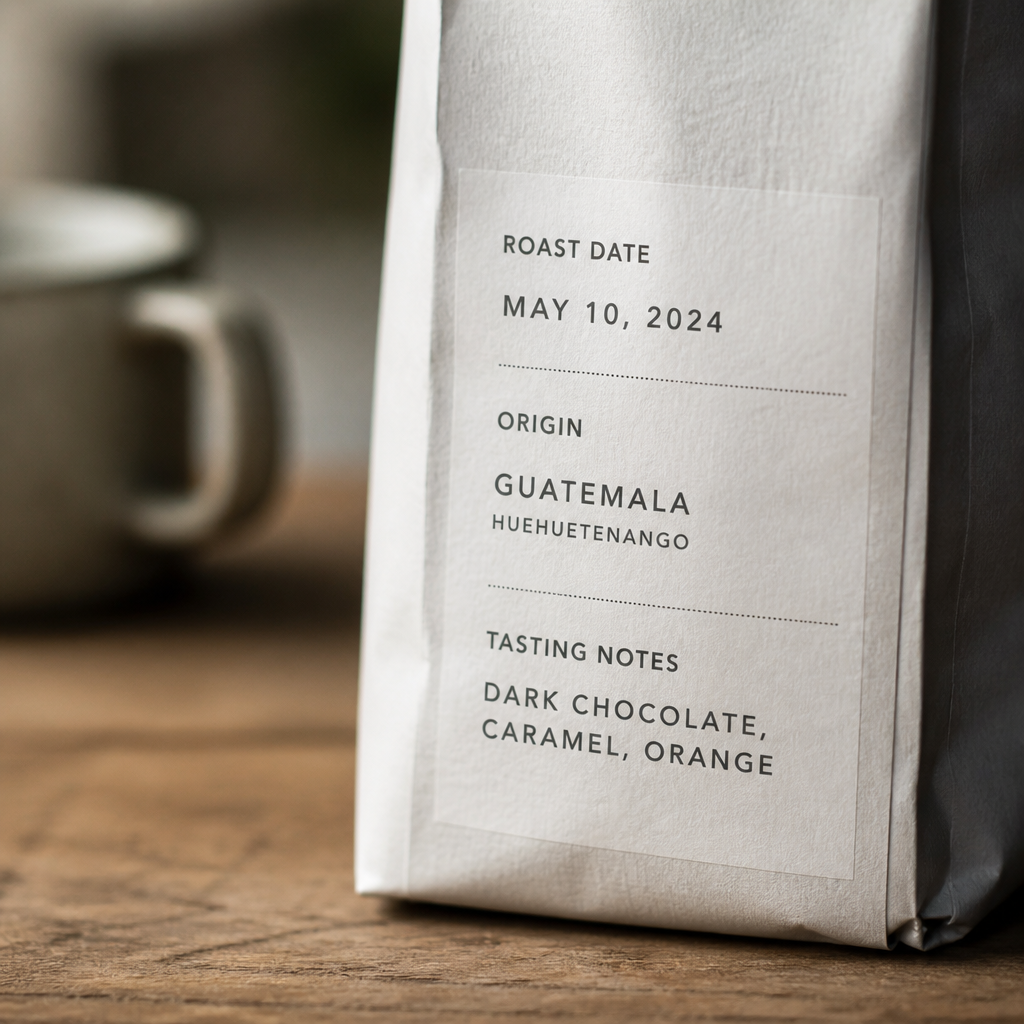
The roast date tells you how long the coffee has been out of the roaster, which is the single best predictor of freshness. Coffee is generally considered to be at its best somewhere between about one and four weeks after roasting: recently roasted enough to still have its carbon dioxide and aromatic compounds, but rested enough for the most intense degassing to have settled down.
If a bag only shows a "best by" or expiration date rather than a roast date, treat that as a weaker signal. Best-by dates are often set many months out and do not tell you how fresh the coffee actually is right now.
Origin and processing method
Origin usually names a country and sometimes a specific region, farm or cooperative. More specific origin information generally correlates with more careful sourcing, though it is not a guarantee of quality on its own.
Processing method describes how the fruit was removed from the coffee seed after harvest. Washed process coffee tends to taste cleaner and more defined; natural process, where the fruit dries on the seed before removal, tends to add heavier, fruitier and sometimes fermented notes. Honey process falls between the two. None of these is inherently better, but knowing which one you are drinking helps explain what you are tasting.
A roast date tells you when the coffee was made. A processing method tells you what kind of coffee it was made to be.
Reading note
Tasting notes and what to do with them
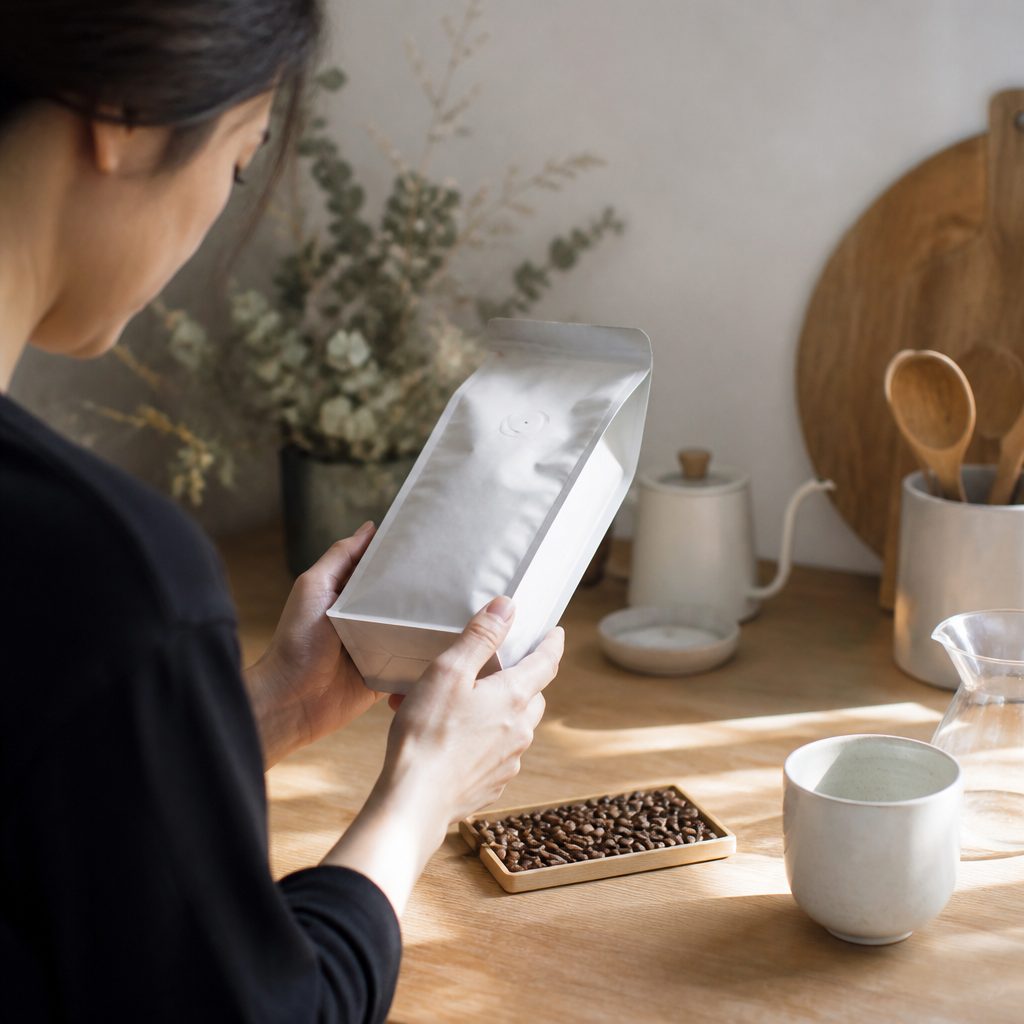
Tasting notes such as "citrus" or "milk chocolate" describe flavors a taster associated with the coffee, usually chosen from a standard flavor wheel used across the specialty coffee industry. They are a useful hint about acidity and sweetness, but they are subjective and can vary from one taster's palate to another. Treat them as a rough guide, not a promise.
Grade and quality terms
Terms like "specialty grade" generally refer to a scoring system used to evaluate green coffee for defects and cup quality, with a common threshold used across the industry to separate specialty from lower commercial grades. Terms like "premium" or "gourmet," on the other hand, have no standard definition and can be used on almost any bag regardless of quality.
| Term | What it tells you | How much to rely on it |
|---|---|---|
| Roast date | Exact freshness window | High |
| Origin and process | Likely flavor profile | Medium to high |
| Tasting notes | One taster's impression | Medium, treat as a rough guide |
| "Premium" or "gourmet" | Marketing language | Low, no standard meaning |
Where to go next
Once you know how fresh a bag is, the next question is how to keep it that way, which is covered in the storage and freshness section.
A coffee bag names its origin, but it rarely names the year, and that gap matters more than most drinkers expect. Wine labels carry a vintage because weather shifts from season to season, and the same is true of coffee: a warm year, a cool year, a small crop or a generous one all change what ends up in the bag. Reading a harvest note is a skill you can carry over from one drink to the other. If you want to see how that works in practice, the guide to the year on the label walks through Marlborough vintage reports and what each kind of season means for sauvignon blanc in the bottle.
The same skill applies when you buy a book you cannot hold first. A seller's notes about a coffee bag tell you roast date, origin and process; a seller's notes about a book tell you edition, printing and condition, and both reward slow reading. If you want a method for judging a title page, packing a volume that has to travel, and storing it once it lands, the guide to reading a seller's description walks through each step in order. Coffee and books share one rule: the details printed on the outside decide what you get on the inside.