Roast level is often treated as a simple light-to-dark scale, but it describes a real chemical process happening inside the bean. Understanding that process explains why a light roast tastes brighter and a dark roast tastes heavier, rather than just accepting it as a label.
What roasting actually does to a bean
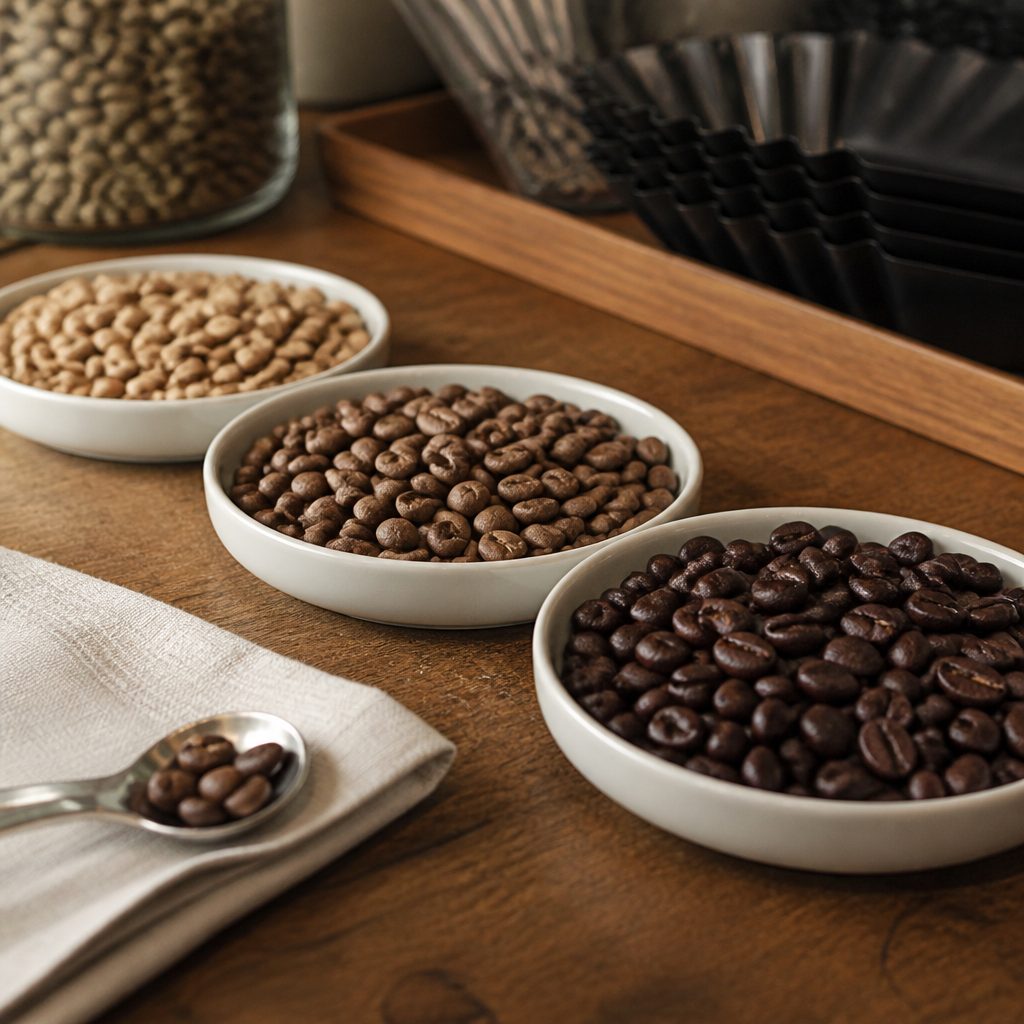
Green, unroasted coffee beans are dense, grassy-smelling and not something anyone would want to drink. Roasting applies heat that drives out moisture, breaks down complex sugars and acids, and triggers browning reactions similar to what happens when bread crust forms or meat sears. These reactions are what create the flavors people associate with coffee.
Two audible markers, called cracks, happen during roasting. The first crack is when trapped moisture and gas cause the bean to expand and audibly pop; most light roasts are pulled shortly after this point. A second, quieter crack happens later as oils begin to surface on the bean, which marks the start of darker roast territory.
Light, medium and dark: what changes
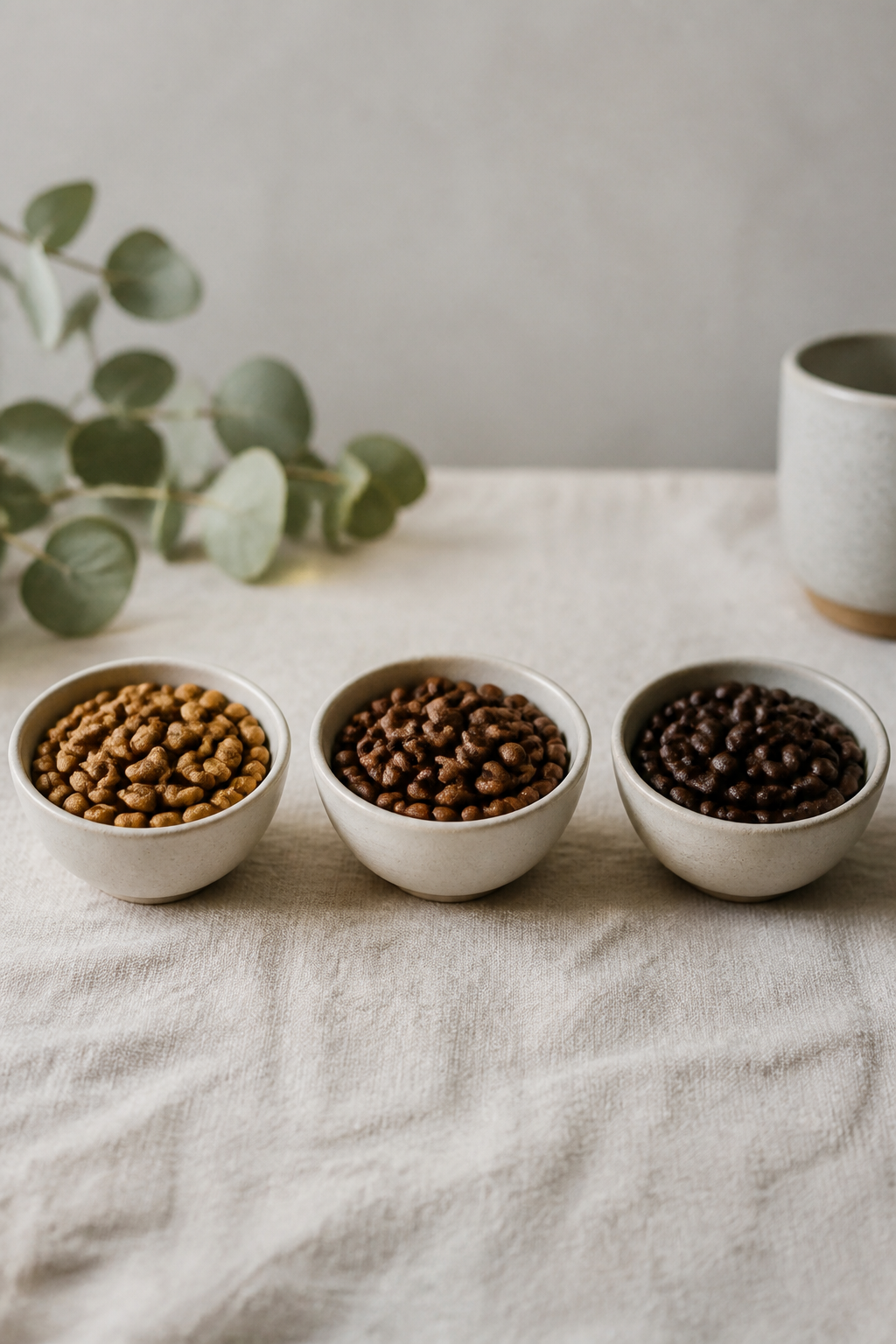
A light roast is stopped soon after the first crack. It tends to preserve more of the acidity and the specific flavor notes tied to where the coffee was grown, at the cost of a lighter body. A medium roast is carried further, softening some of that acidity while building more caramelized sweetness. A dark roast is taken past the second crack, developing a heavier body and more bitterness, often at the expense of the coffee's original origin character.
None of these levels is objectively better. They represent different trade-offs between brightness, sweetness, body and bitterness, and different brewing methods often suit different roast levels.
Roasting does not add flavor from nothing. It transforms the flavor potential already present in the green bean, and can only reveal so much before it starts to erase it.
Reading note
Origin flavor vs roast flavor
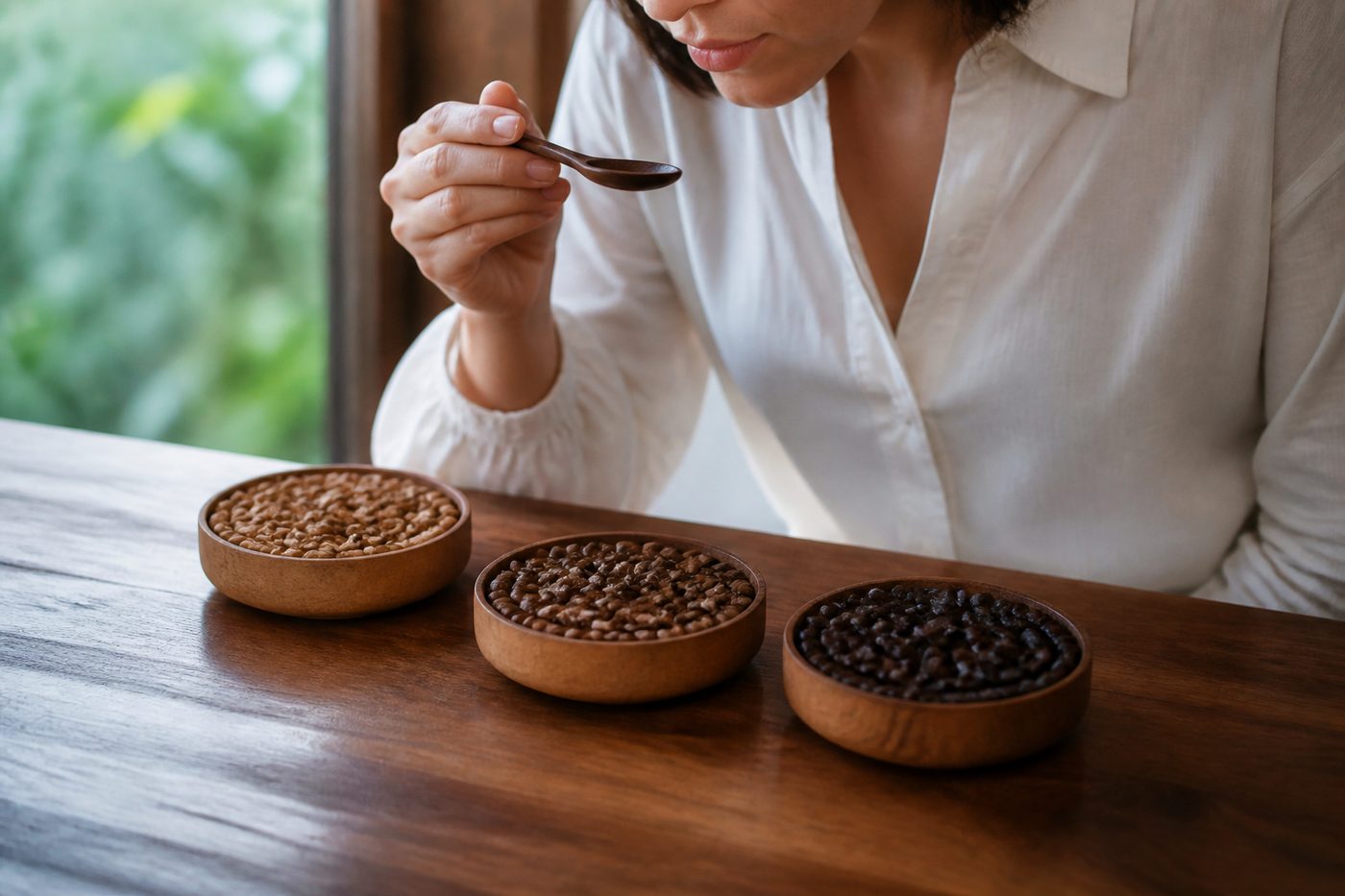
A very dark roast tends to taste similar regardless of where the beans came from, because the roasting process itself dominates the flavor. Lighter roasts let more of the underlying character of the origin and variety come through, which is part of why specialty coffee sold by origin is usually roasted on the lighter side.
Choosing a roast level for your method
Espresso is traditionally brewed with medium to dark roasts, partly because the pressure and short contact time of espresso extract intensely and a darker roast holds up well to that. Pour-over and other filter methods are commonly paired with light to medium roasts, since the longer, gentler extraction has time to draw out more delicate flavor notes.
These pairings are conventions, not rules. A light roast can be pulled as espresso, and a dark roast can be brewed as a pour-over. The starting points above are simply where most people find the best balance with the least adjustment.
Where to go next
Roast level is only half the picture. How fresh the roast is, and how the bag communicates that, is covered in the next guide in this section.
Roast level and grape variety are different variables, but both reward the same habit: reading the record before you judge the cup. A light roast keeps the acidity and origin character that a dark roast flattens, and a cool vintage does something similar in wine, holding back sugar and pushing acidity forward. If you want a worked example of how that plays out year by year, reading a vintage report for Marlborough sauvignon blanc shows which seasons ran warm, cool, small or generous, and how long the bottles hold. The skill transfers: track the conditions, then taste with those conditions in mind.